Thales Alenia Space in Spain completed SCOPS SEE Campaign at UCLouvain Cyclotron Facility
SCOPS – 2026, oct 28
Thales Alenia Space in Spain conducted a five-day Single Event Effects (SEE) test campaign, from September 21 to 25, on SCOPS devices at the UCLouvain cyclotron facility to evaluate their robustness against radiation-induced effects.
Single Event Latch-up (SEL) Testing
The campaign started with SEL testing, as latch-up susceptibility is a critical failure mode that must be ruled out before continuing with further radiation characterization.
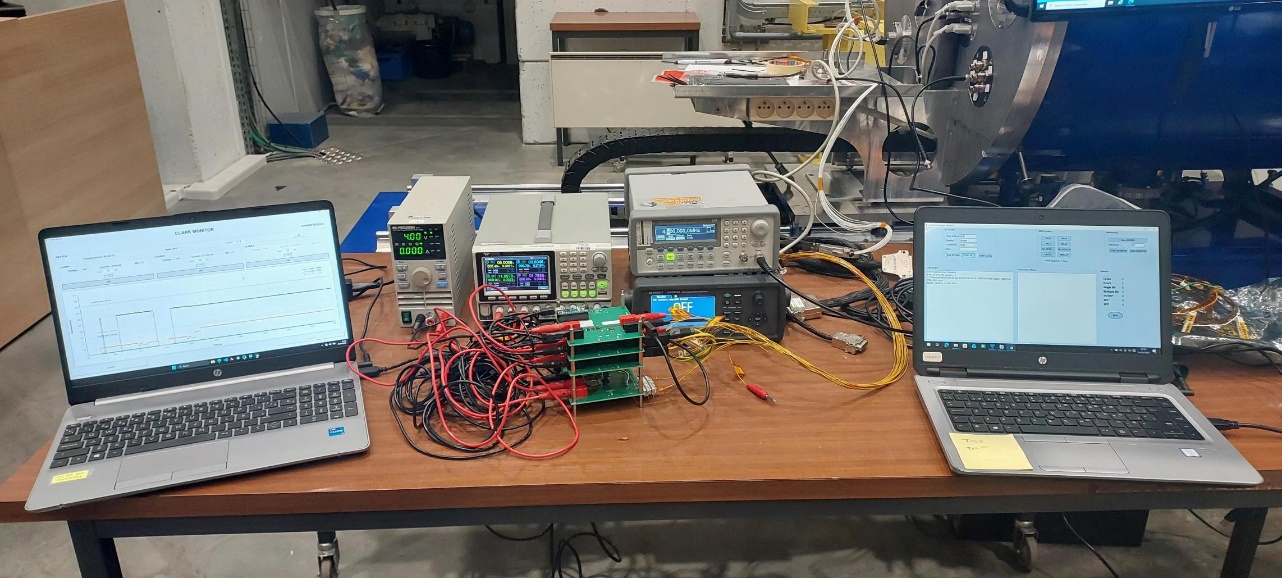
The first device was irradiated using Xe ions at the highest test energy. Immediate failure occurred when the beam was applied. After technical discussions, the failure was suspected to be related to either Single Event Gate Rupture (SEGR) or Single Event Burnout (SEB).
To continue the investigation, a second device was tested under less severe conditions, including reduced ion energy, lower operating temperature, and reduced supply voltage. The device successfully completed the test. Subsequent testing of the remaining functional samples at the highest ion energy level did not reveal any SEL events.
Single Event Transient (SET) Testing
SET characterization was performed on both analog and digital sections of the SCOPS devices. Various signals were monitored during irradiation to detect transient disturbances and deviations from nominal behavior.
For the second and third samples, transient events were measured and catalogued at two different ion energy levels. The devices successfully completed the SET campaign.
Single Event Upset (SEU) Testing
SEU testing was performed on the digital circuitry of SCOPS. The devices demonstrated stable operation, and no significant issues were observed during the campaign.
Additional SEL and Safe Operating Area Investigation
Following analysis of the initial device failure, additional SEL testing focused on the OTP supply domains. No latch-up events were observed during these tests.
A Safe Operating Area (SOA) investigation was then conducted to determine the root cause of the first device failure. The analysis showed that the maximum specified supply voltage for the device was 13 V, while the failed irradiation run had been performed at 15 V.
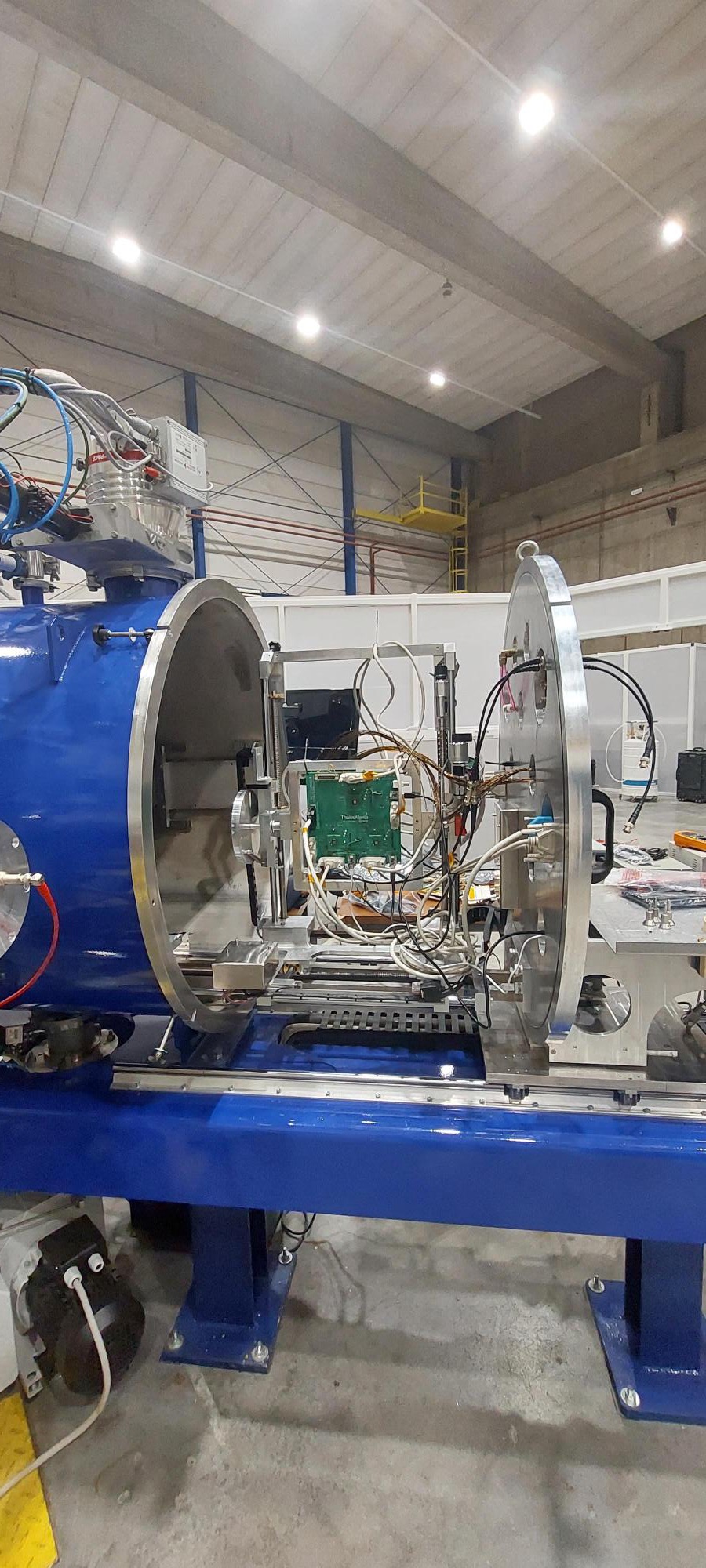
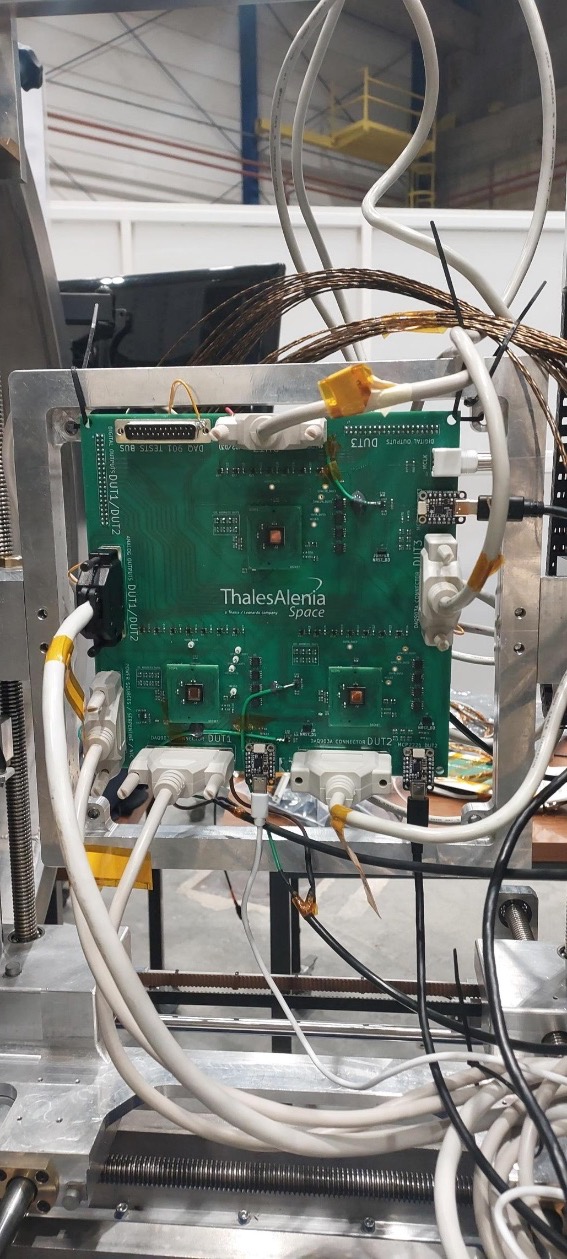
Campaign Outcome
The SEE campaign successfully demonstrated:
- No SEL susceptibility under the validated operating conditions.
- Successful SET characterization at multiple ion energy levels.
- Successful SEU testing of the digital functions.
- Successful verification of OTP supply robustness.
- Identification of the root cause of the initial device failure through SOA analysis, confirming operation beyond the specified maximum supply voltage rating.
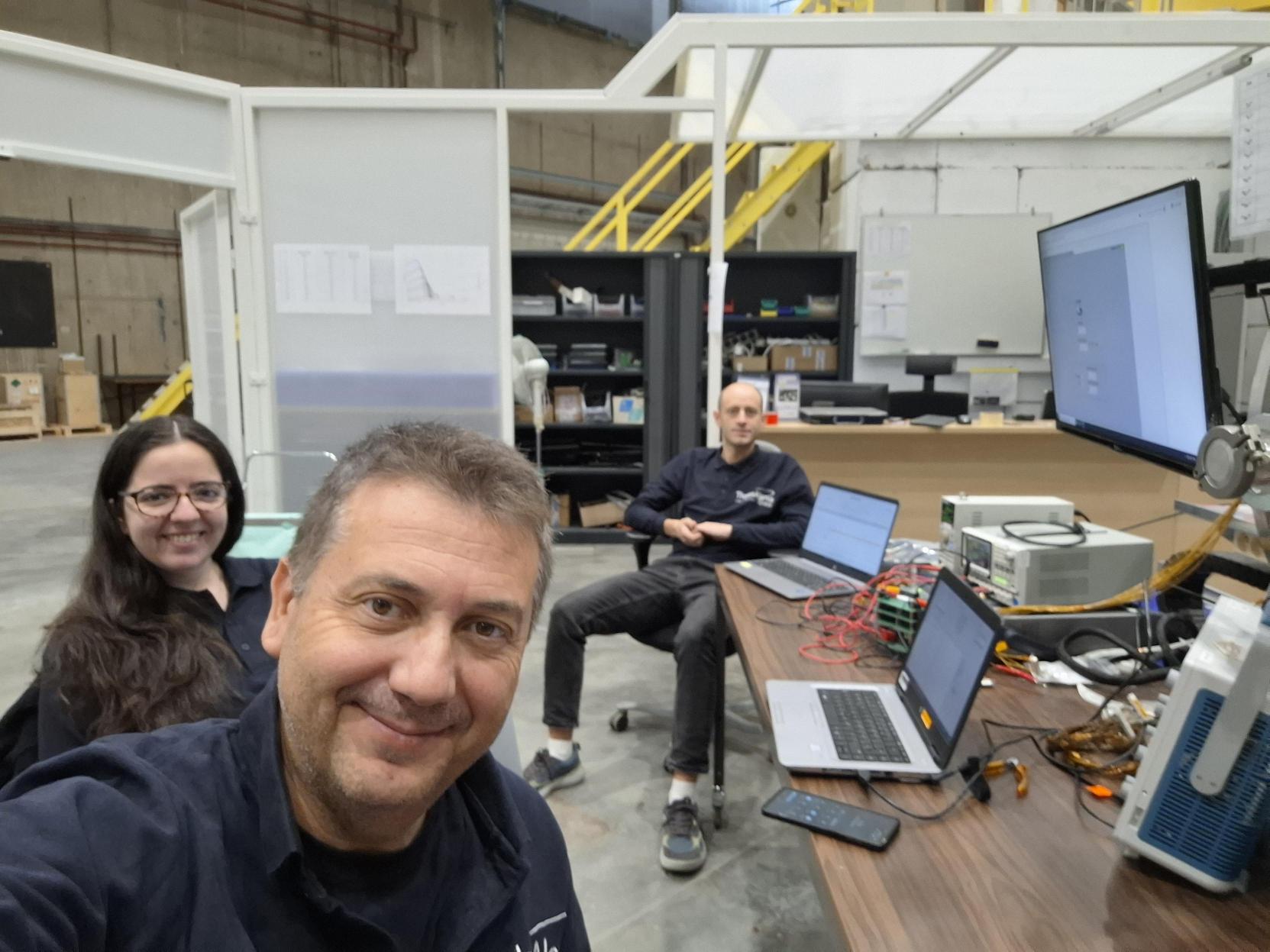
From left to right: Cristina Duran (EEE Parts Engineer), Juan Cueto (EEE Parts & Radiation Engineering Manager), and Ismael Hernández (EEE Parts Engineer)